

As we approach 2026, healthcare leaders are poised to turn intelligent technologies into tools that genuinely save lives. From early cancer detection to predictive patient monitoring, the coming year marks a pivotal shift where innovation helps clinicians act sooner, respond faster, and care more personally, all while preserving the human warmth at the core of medicine.
Key Takeaways for 2026 Strategy
- Proactive Intervention: 2026 will see the rise of predictive rather than reactive care models.
- The Blended Standard: Success in the coming year will depend on pairing advanced tools with clinical empathy.
- Evidence-Led Adoption: Adoption will be guided by real-world outcomes from institutions like the NHS and WHO.
Where Will Intelligent Systems Make a Real Difference?
In 2026, the objective will not be automation for its own sake but precision and improved patient outcomes. Healthcare teams will increasingly use intelligent systems to:
- Accelerate Diagnostics: Achieving higher accuracy in radiology, pathology, and genomics.
- Anticipate Risk: Identifying patient deterioration well before conditions escalate.
- Empower Staff: Reducing administrative burdens so clinicians can return to direct patient care.
- Bridge Care Gaps: Extending critical services to rural and underserved areas through virtual monitoring.
Real Tools, Real Frontline Impact
Sharper Diagnostics Built on Proven Models
Established platforms such as Google Health, Zebra Medical Vision, and PathAI offer a glimpse of how hospitals will apply these technologies in 2026.
- Google DeepMind’s breast cancer screening models are already demonstrate the potential to significantly reduce false positives.
- PathAI is currently refining how AI-assisted pathology can improve accuracy for complex diseases like NASH.
Throughout 2026, more hospitals will integrate these models to support radiologists by enabling earlier detection and reducing manual workload.
Safer, Smarter Patient Monitoring
Real-time data platforms like Current Health, Biofourmis, and Philips IntelliVue will continue to redefine the hospital-at-home concept:
- Biofourmis has documented the ability to reduce hospital readmissions through personalized care algorithms.
- Current Health (Best Buy Health) is enabling continuous vitals tracking, allowing for safer remote recovery.
The Irreplaceable Core: Why Human Care Remains Essential
AI will not hold a patient’s hand before surgery. It cannot break bad news with nuance or understand deep cultural context. Human care remains irreplaceable. As we enter 2026, doctors, nurses, and caregivers remain the essential decision-makers because AI:
- Will not comfort a grieving family.
- Can’t make the final ethical calls in complex cases.
- Can’t build the fundamental trust required for healing.
Technology will assist, not replace. Clinicians will still interpret the insights, build the trust, and guide families through their most difficult decisions.
The Rise of Hybrid Healthcare
The highest-performing systems in 2026 will be defined by a Blended Model:
- Intelligent Tools for high-velocity analysis and predictive alerts.
- Clinicians for judgment, empathy, and building patient trust.
- Agile Teams trained to know when to rely on data and when human intuition must lead.
Lead the Shift with AI Opportune
Every healthcare leader in 2026 will face a choice: adopt these capabilities with intention or risk falling behind. At AI Opportune, we guide you with practical tools and trusted insights so you can lead your team with confidence.
Be the leader who redefines care, not the one left adjusting after the fact.
If you want real-world, evidence-based insight into the future of healthcare, stay with AI Opportune. The next breakthroughs will be closer than you think.
You May Also Like
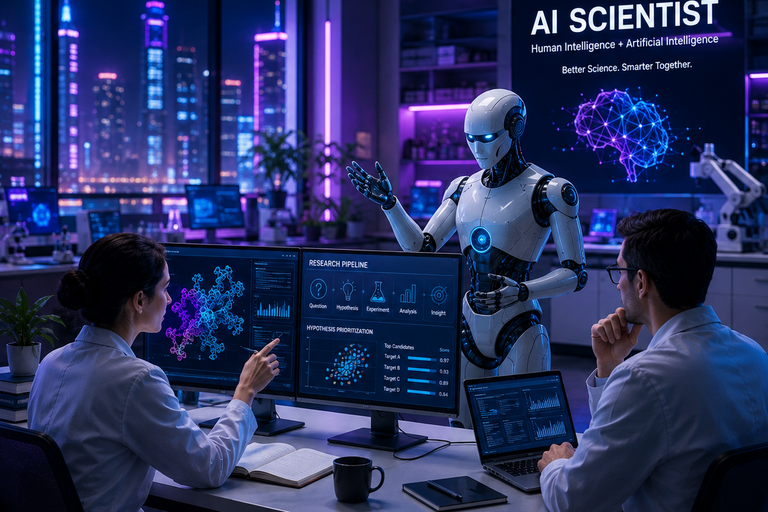
The Rise of the AI Scientist: How Healthcare Researchers Are Using Autonomous AI in 2026
Autonomous AI systems are quietly shifting from passive data processors into active discovery partners. By reasoning across complex scientific literature, multimodal patient records, and lab instruments, platforms like…
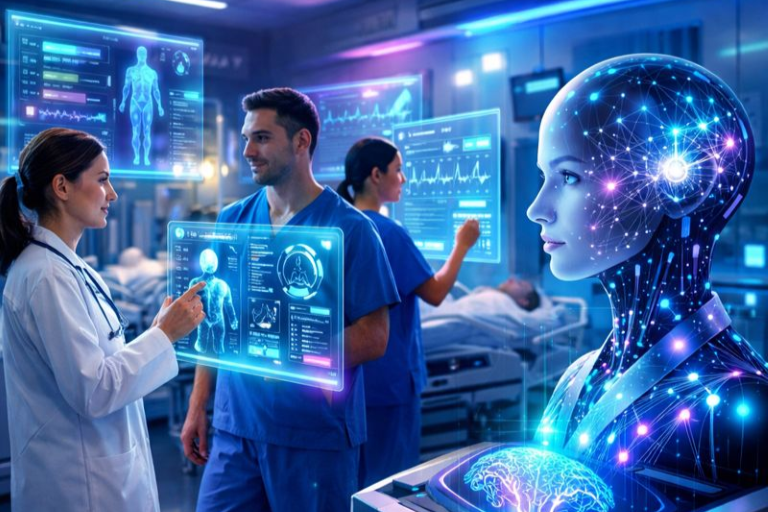
How Does OpenAI for Healthcare Reduce Clinical Documentation Burden? 5 Core Workflows
OpenAI for Healthcare reduces documentation burden by providing HIPAA-aligned, BAA-backed infrastructure. It automates ambient clinical intelligence, chart summarization, and EHR (Electronic Health Record) workflows, allowing clinicians to convert…
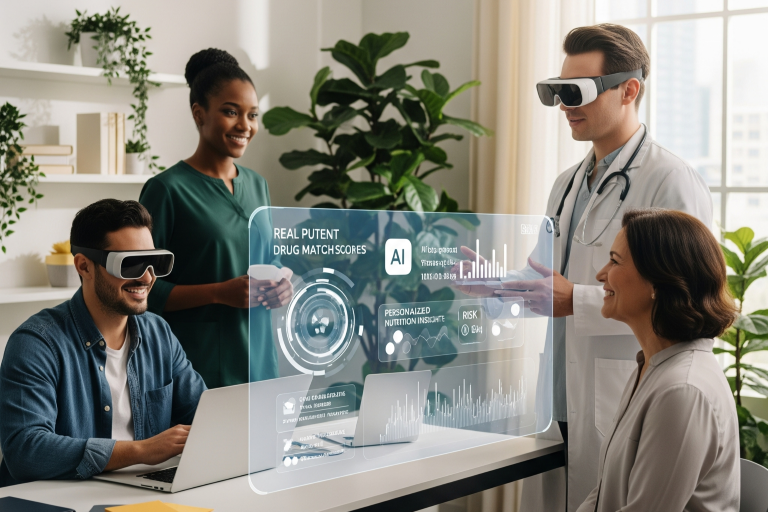
🩺 AI-Driven Personalized Medicine in 2026: A Startup Founder’s Playbook
In 2026, AI isn’t just helping doctors — it’s redesigning medicine around each individual. From AI-designed drugs to personalized nutrition and faster cancer detection, startups are turning precision…