

Modern marketing teams face a major data overload problem. Collecting and connecting insights across multiple platforms can take days, delaying the strategic decisions that turn market signals into action.
AI-powered brand intelligence can move teams beyond slow, periodic research toward continuous analysis, helping marketers connect brand, customer, competitor, and market signals into a more usable view of what is changing and where opportunities may exist.
One example is BlueOceanAI, whose Spark platform uses a multi-agent approach to help marketers work with brand, competitive, customer, and market intelligence. AWS describes Spark as an always-on, multi-agent, domain-specific framework built on Amazon Bedrock. (AWS case study)
From Market Research to Continuous Intelligence
Traditional research often follows:
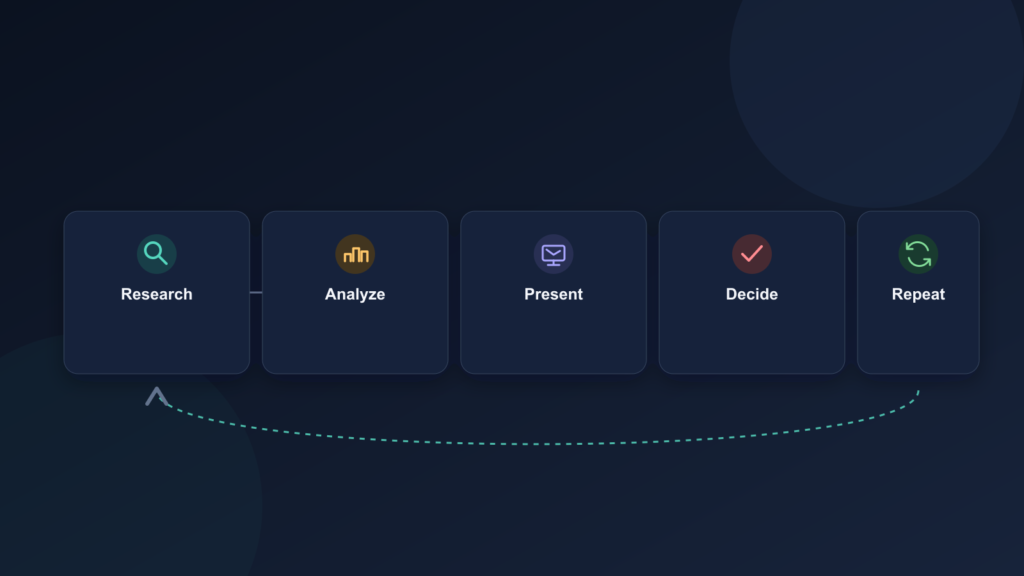
But markets keep moving between those cycles.
A competitor changes its pricing. Customer sentiment shifts. A new product enters the category. Search behavior changes.
An AI-enabled approach can shorten the loop:
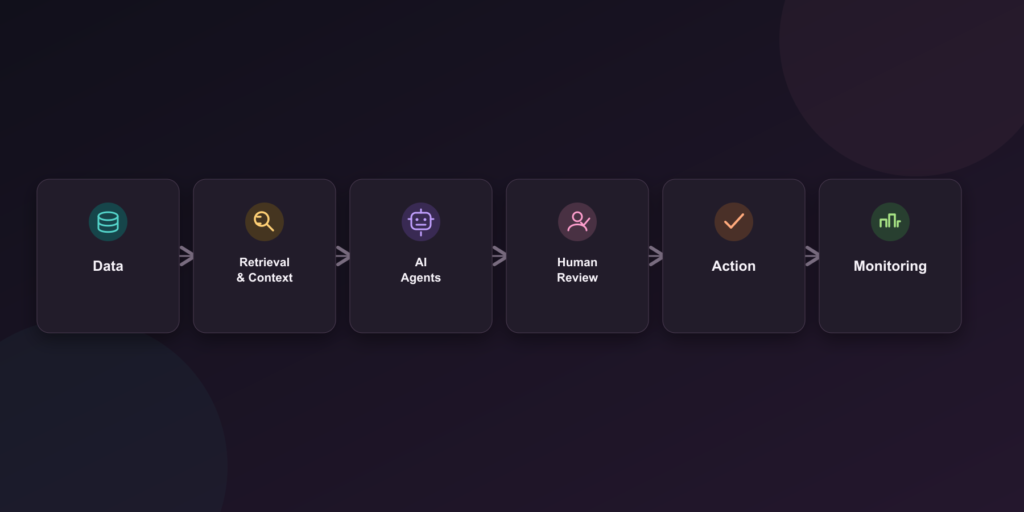
The goal is not to remove research or human judgment. It is to reduce the time spent collecting and organizing information so marketers can spend more time interpreting it.
What Agentic Brand Intelligence Looks Like
The difference between a chatbot and an agentic system is the workflow behind the answer.
A marketing team might ask:
- How is our positioning changing relative to competitors?
- What customer concerns are appearing repeatedly?
- Where are competitors gaining visibility?
- Which messaging themes could help differentiate us?
- What market developments deserve attention?
Instead of simply generating a response from its existing knowledge, a multi-agent system can investigate different parts of the question using relevant business information.
A simplified model looks like:
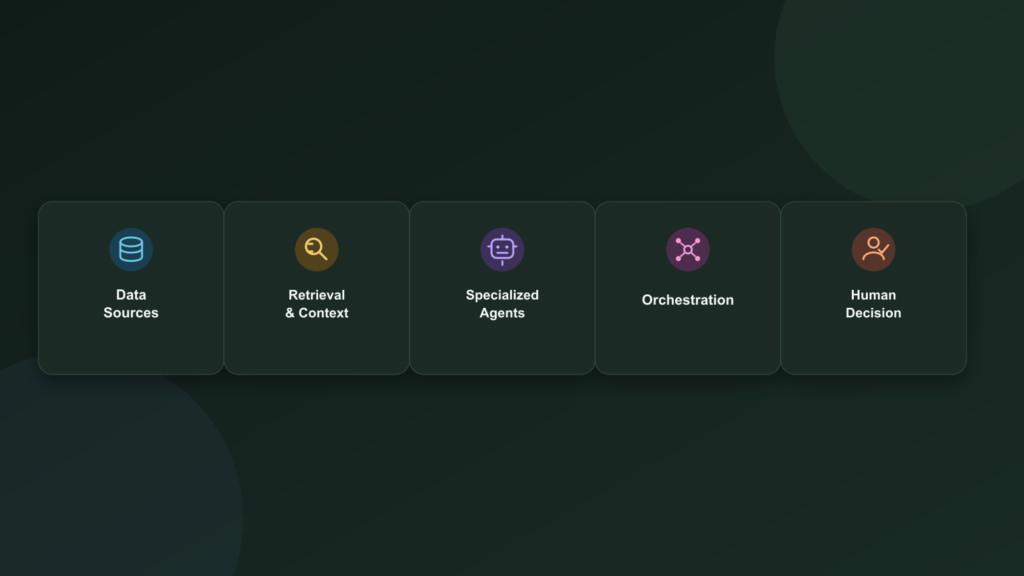
For example:
Competitor Agent
Tracks pricing, products, positioning, and messaging.
Customer Insight Agent
Analyzes reviews, feedback, support conversations, and recurring concerns.
Market Agent
Looks at category developments, search behavior, and emerging topics.
Brand Strategy Agent
Connects those findings to positioning, differentiation, and potential opportunities.
The exact setup will vary by organization. The important part is connecting the right information to the right workflow.
What BlueOcean Reports
The BlueOcean case provides a useful example of what this can look like in practice.
AWS reports:
- 97% operational improvement
- Tasks that took around 5 days reduced to about 2 hours
- 66% to 96% lower marketing analytics costs
- Around 1.2 billion tokens processed in one month
- More than 10,000 marketing-specific questions answered
- 21% reduction in BlueOcean’s operating expenses
- Some customers reporting 4x faster marketing-investment payback (AWS)
These are reported AWS and BlueOcean case-study results, not benchmarks that every marketing team should expect.
What is more interesting is the underlying model: AI agents can turn fragmented marketing information into something teams can investigate repeatedly instead of starting a new research project every time a question comes up.
Where Humans Still Matter
AI can investigate patterns quickly. It cannot automatically know what a particular insight means for your business.
A useful division of responsibility is:
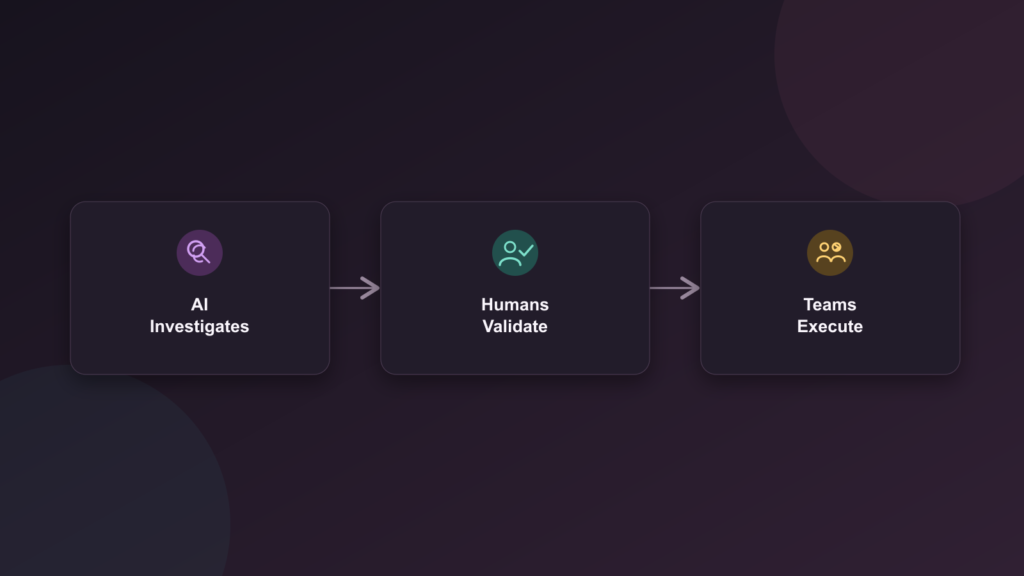
AI can identify what changed, surface patterns, connect signals, and show supporting evidence.
Humans still decide:
- Does the evidence make sense?
- Is anything missing?
- Why does this matter to our customers?
- Does it fit our brand?
- What should we actually do?
That human checkpoint is particularly important when AI-generated insights influence public messaging, positioning, campaigns, or other high-impact decisions.
How to Start
Companies do not need to build a sophisticated multi-agent platform immediately.
A practical rollout could be:
1. Start with one recurring problem
For example, weekly competitor monitoring.
2. Connect reliable sources
Bring together relevant websites, customer feedback, internal documents, APIs, search signals, or CRM data.
3. Add one or two specialized workflows
Start with competitor analysis or customer insight rather than trying to automate everything.
4. Keep humans in the loop
Review important recommendations before they influence public-facing decisions.
5. Measure the impact
Track research hours saved, time from signal to decision, insight quality, research costs, and downstream business results.
The objective is not simply to “use AI.”
It is to make a real marketing process faster, more informed, and easier to repeat.
Opportunity Lens
The opportunity is bigger than generating more marketing content.
AI agents can help marketing teams move from collecting information to continuously interpreting it.
Start with one recurring business question. Connect reliable data. Give AI a focused job. Keep humans responsible for judgment. Then measure what changes.
The advantage may not come from having more data.
It may come from turning the right signals into useful decisions faster.
Subscribe to AI Opportune for practical AI insights, real-world use cases, and ideas you can put to work.
You May Also Like

AI Marketing in 2026: Why Dynamic Creative Optimization Became the Engine Behind Modern Campaigns
If there is one thing quietly changing the game for marketing campaigns in 2026, it is Dynamic Creative Optimization (DCO). It is no longer just some niche AdTech…
EDO’s ChatEDO: Why Agentic AI is Replacing Traditional Marketing Analytics Dashboards in 2026
How to transform media reporting from a "reporting culture" to a "decision culture". EDO’s ChatEDO replaces traditional dashboards by using agentic AI to eliminate the "latency gap" in…

🚀 How WPP’s AI Production Studio Works — A Complete Guide for Modern Marketing Teams and Agencies
WPP’s AI Production Studio is redefining how marketing content gets made — turning weeks of production into hours. Powered by NVIDIA Omniverse and OpenUSD, it gives brands and…

🎨 The New Creative Edge: How AI Will Redefine Marketing & Media in 2026
Discover how AI is reshaping marketing and media in 2026 — from hyper-personalized campaigns to AI-powered content creation. Learn how top brands use tools like Runway, Firefly, and…