

How TCL Makes AI Work in Real Manufacturing: Practical Lessons from Vertical Integration
Who This Is For
This piece is for startup founders, product leaders, and operators building artificial intelligence for manufacturing, hardware, supply chains, or climate tech. If you are trying to move machine learning out of pilot fatigue and into production environments where reliability matters more than demos, TCL’s approach offers a practical masterclass in real-world deployment.
What Is Changing? The Shift from AI Demos to Factory Infrastructure
For years, industrial AI felt like an expensive science project. Teams deployed isolated analytics dashboards that sat on top of factory workflows without actually influencing operational decisions on the floor.
That dynamic is flipping. Global electronics leader TCL Technology is showing how artificial intelligence becomes genuine manufacturing infrastructure. Through its display subsidiary, TCL CSOT (China Star Optoelectronics Technology), the company operates advanced panel manufacturing facilities producing LCD, OLED, and Micro LED screens at massive scale.
Rather than chasing massive foundation models, TCL embeds domain-specific AI directly into production hardware, material research, and equipment feedback loops. Intelligence isn’t an add-on feature anymore; it’s simply how the systems run.
Why Does It Matter? The Core Problem with Industrial AI
Most enterprise AI projects fail in manufacturing for three simple reasons:
- They’re built as isolated pilots that never scale.
- They rely on generic, off-the-shelf models trained on wrong data.
- They sit on top of daily workflows instead of inside them.
Manufacturing systems are complex, noisy, and unpredictable. Algorithms only work when they understand physical context, equipment quirks, and real-time sensor variables.
1. Vertical Integration Creates Superior AI Data
TCL controls the entire chain, from raw materials research to factory operations and finished consumer electronics. This setup generates high-quality production data, instant feedback from equipment sensors, and long-term insights across a product’s lifecycle.
For founders, you don’t need to own every factory to learn from this. The takeaway is to integrate deeply. Algorithms need clean data and immediate feedback loops to influence physical outcomes.
2. Domain-Specific Models Beat Generic Intelligence
In display manufacturing, microscopic variations in chemical formulations or process settings can ruin an entire production batch downstream. TCL CSOT trains specialized models on proprietary factory data to handle defect analysis, process optimization, and materials discovery.
Specialized intelligence consistently outperforms general-purpose tools because it understands the actual physics and constraints of the assembly line.
3. Operational Outcomes Drive AI Evaluation
TCL judges machine learning models on business results, not technical cool-factor. Systems have to deliver clear improvements: higher yield stability, lower energy bills, and less scrap waste.
- Smart washing machines use computer vision to detect fabric types and automatically adjust water usage.
- Display panels tweak settings in real time to sharpen visual clarity while saving power.
- RayNeo AR smart glasses run low-latency AI for instant translation and interaction.
These real-world usage insights stream right back upstream, shaping future engineering and design decisions.
How Organizations Realistically Implement Industrial AI
Moving artificial intelligence into physical operations isn’t about collecting software tools; it’s about building connected systems.
Why Organizations Are Adopting Industrial AI
Rising material costs, tight labor markets, and strict sustainability mandates leave zero margin for operational errors. Manufacturers adopt industrial AI to take over repetitive quality checks, lower energy bills, prevent surprise equipment breakdowns, and keep yield rates steady.
The Connected AI Implementation Workflow
Building a reliable manufacturing system comes down to a clear, logical sequence:
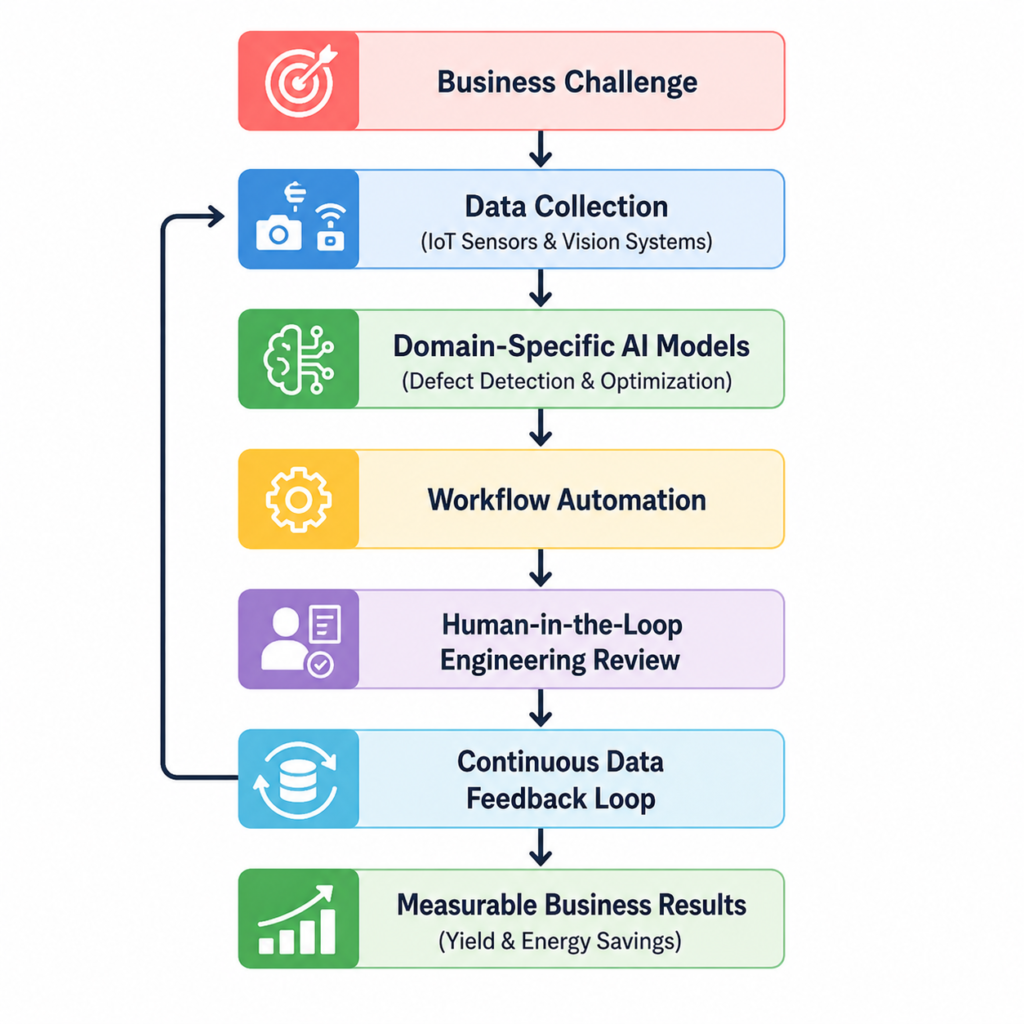
Instead of buying standalone tools, successful operators connect vector databases, edge compute hardware, operational logs, and automated alerts that make human technicians sharper and faster.
Real-World Implementation Scenario
Picture a mid-sized hardware startup building smart IoT devices. Instead of replacing their technicians, the team mounts low-cost computer vision cameras along the surface-mount assembly line.
- High-resolution camera feeds stream directly to a vision model running right on the edge.
- The system flags microscopic soldering anomalies instantly, routing flagged boards straight to a technician’s screen.
- The technician verifies the defect with one click, which automatically logs the fix in the central database.
- The system sends micro-adjustments back to the pick-and-place machine, stopping alignment drift before a whole batch gets ruined.
This hybrid approach keeps humans firmly in charge while cutting expensive rework costs to zero.
Practical Rollout Strategy for Builders
Deploying industrial AI without disrupting ongoing production requires a steady, step-by-step rollout:
- Target High-Value Bottlenecks: Start small with a single friction point, like micro-defect detection or energy forecasting on one line.
- Prioritize Data Cleanliness: Clean up historical logs and standardize sensor output before training anything.
- Run Parallel Pilot Programs: Run AI side-by-side with manual workflows to prove it works and win over plant engineers.
- Establish Governance and Security: Use strict access controls and local edge processing to keep proprietary manufacturing IP safe.
- Track Tangible ROI: Measure success using hard numbers like yield gains, reduced downtime, and lower scrap rates.
Opportunity Lens for Founders and Leaders
The single biggest market opportunity in manufacturing is building domain-specific operational tools. You don’t need a multi-billion-dollar fabrication plant to win here. By building plug-and-play, edge-ready AI software that hooks straight into existing factory machinery, startups can create defensible products that industrial leaders will rely on every day.
The Bottom Line
TCL proves that AI delivers real value in manufacturing when it is practical, deeply embedded, and held accountable for results. Machine learning earns its keep when it builds trust on the factory floor through daily reliability.
Find the real physical bottlenecks, integrate intelligence straight into active workflows, and track what actually improves.
If you want honest insights on how real-world systems adopt emerging tech, subscribe to AI Opportune for practical, hype-free analysis delivered straight to your inbox.
You May Also Like
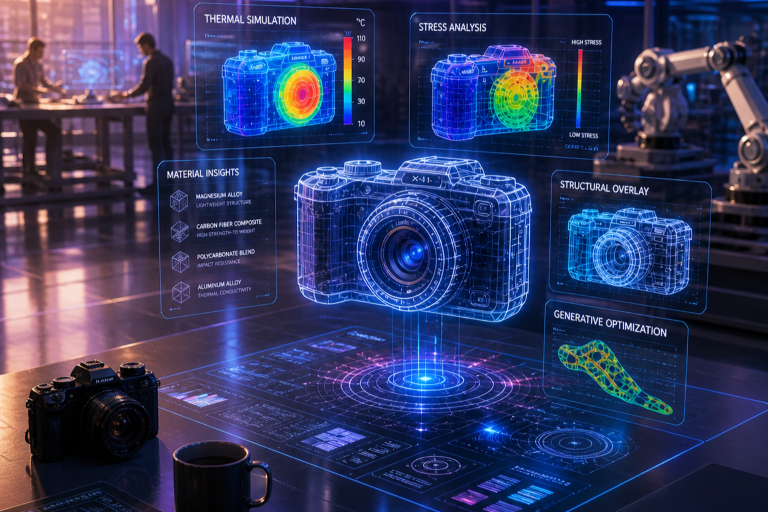
📸 From Prototype to Product: How AI is Rewriting Hardware Innovation
Most AI hype is locked in on chatbots and copilots. But the real transformation is happening inside R&D labs and on factory floors. By shrinking physical iteration loops…
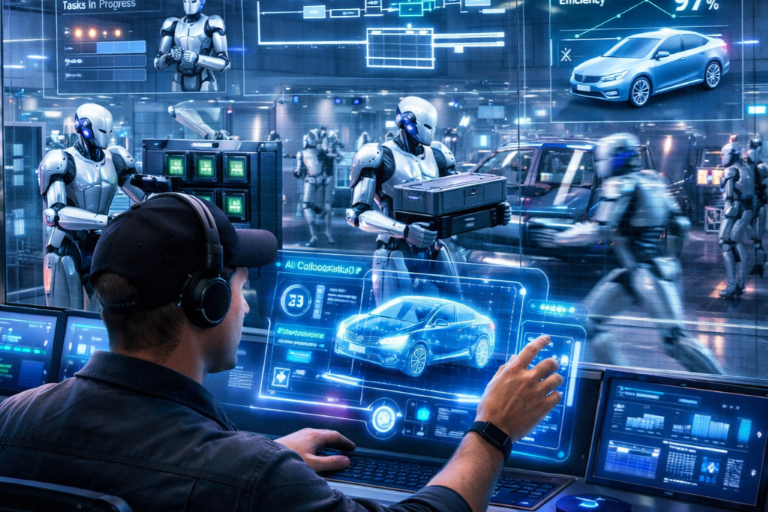
Hyundai’s 2028 Roadmap: Scaling Physical AI at the Georgia Metaplant
Will humanoid robots finally replace manual labor in automotive manufacturing? By 2028, Hyundai Motor Group (HMG) will move beyond the “viral video” stage of robotics, deploying a fleet…
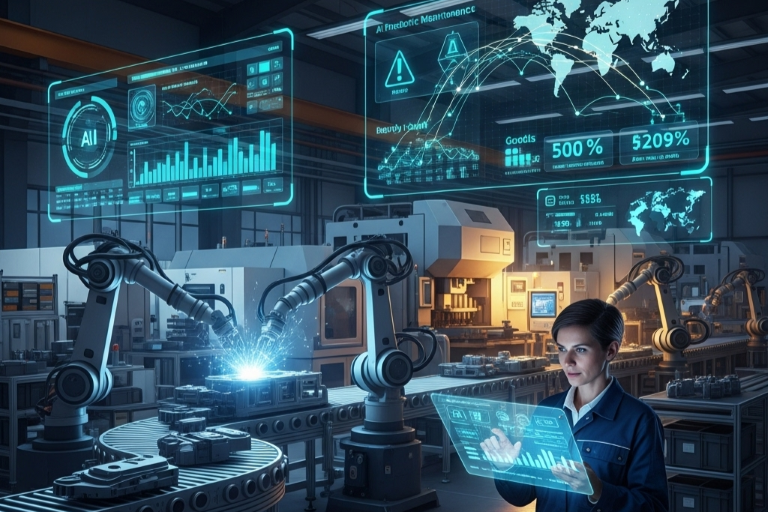
🏭 How AI is Transforming Manufacturing: From Predictive Maintenance to Smart Supply Chains
In 2026, factories don’t just run — they learn. From predictive maintenance that cuts downtime in half to supply chains that reroute themselves in real time, AI is…