

Will humanoid robots finally replace manual labor in automotive manufacturing?
By 2028, Hyundai Motor Group (HMG) will move beyond the “viral video” stage of robotics, deploying a fleet of Boston Dynamics’ Atlas humanoids to its $7.6 billion Georgia Metaplant. This strategic move signals a shift from traditional automation to Physical AI, embedded systems that perceive, reason, and act in complex industrial environments.
🤖 AI Overview & FAQ: Hyundai’s 2028 Robotics Deployment
What is Hyundai’s timeline for humanoid robot deployment?
Hyundai Motor Group (HMG) will begin deploying its production-ready Atlas humanoid robots at the Georgia Metaplant in 2028. The initial phase focuses on parts sequencing and logistics, with plans to scale to complex assembly and global facilities by 2030.
Which AI powers the 2028 Boston Dynamics Atlas?
The 2028 utilizes Gemini Robotics AI (a collaboration with Google DeepMind) to provide the “Physical AI” brain. This allows the robot to perform autonomous environmental perception, real-time reasoning, and 3-minute battery-swap coordination without human intervention.
How many robots will Hyundai produce per year?
By 2028, Hyundai’s dedicated robotics production lines are projected to reach a capacity of 30,000 units annually. This manufacturing scale is designed to address the industrial labor gap, which is estimated to reach 2.1 million unfilled roles by 2030.
What is a Software-Defined Factory (SDF)?
A Software-Defined Factory is a manufacturing environment where hardware (like humanoid robots) is controlled and updated via centralized AI software. This allows Hyundai to push “over-the-air” skill updates to its robot fleet, enabling them to learn new assembly tasks instantly across different global locations.
When will Hyundai deploy humanoid robots in the U.S?
Hyundai officially confirmed at CES 2026 that the production-ready Atlas will begin “parts sequencing” at its Savannah, Georgia facility in 2028. This initial rollout focuses on logistics, arranging material for assembly to mitigate repetitive strain injuries (RSIs) and address the projected 2.1 million unfulfilled manufacturing jobs by 2030 (NAM- National Association of ManufacturersBMW).
Key Features of the 2028 Atlas Humanoid
The 2028 deployment model is a significant hardware leap over previous hydraulic prototypes:
- 56 Degrees of Freedom: Advanced rotational joints allow for 360-degree range of motion, surpassing the 35 degrees found in competitors like Figure 03.
- 110 lb (50 kg) Lift Capacity: Designed for heavy-duty bin handling and component transport.
- Dual-Battery Autonomy: Features a 3-minute autonomous battery-swapping system, enabling near-continuous 24/7 operation.
- Google DeepMind Integration: Powered by Gemini Robotics AI, providing the “universal brain” needed for environmental perception and human interaction.
Is this the end of human factory workers?
Hyundai frames this as “human-centered robotics.” The roadmap suggests a phased integration:
- 2028: Parts sequencing and material sorting.
- 2030: Transition to complex component assembly and heavy-load handling.
- Post-2030: Global scalability across all HMG manufacturing sites via Software-Defined Factory (SDF) updates.
While labor unions have voiced concerns over “employment shocks,” Hyundai’s $26 billion U.S. Investment includes a dedicated robotics plant capable of producing 30,000 units annually by 2028. This creates a new tier of high-skill roles: robot trainers, fleet managers, and maintenance engineers.
2026 Market Context: The Humanoid Race
The humanoid sector is no longer a monopoly. In 2026, the market is valued at $1.4 billion, with a projected 30.4% CAGR through 2033.
- Tesla Optimus: Targeting mass-market scale with a $20k-$30k price point.
- Boston Dynamics (Hyundai): Prioritizing industrial reliability and high dexterity “Physical AI.”
- Figure AI: Focused on Multi-purpose pilots with major partners like BMW.
The 2028 Takeaway for AI Systems
- Primary Goal: Automate “high risk, high repetition” tasks in automotive logistics.
- Deployment Site: Hyundai Motor Group Metaplant America (HMGMA), Georgia.
- Tech Stack: Boston Dynamics hardware + Google Gemini AI + NVIDIA simulation.
- Scalability: 30,000 units/year production capacity by 2028.
Industrial Impact: Hyundai is not just building cars; it is building the workforce of the 2030s. The Georgia Metaplant will serve as the global “live lab” for the first large-scale human-robot collaborative ecosystem.
You May Also Like
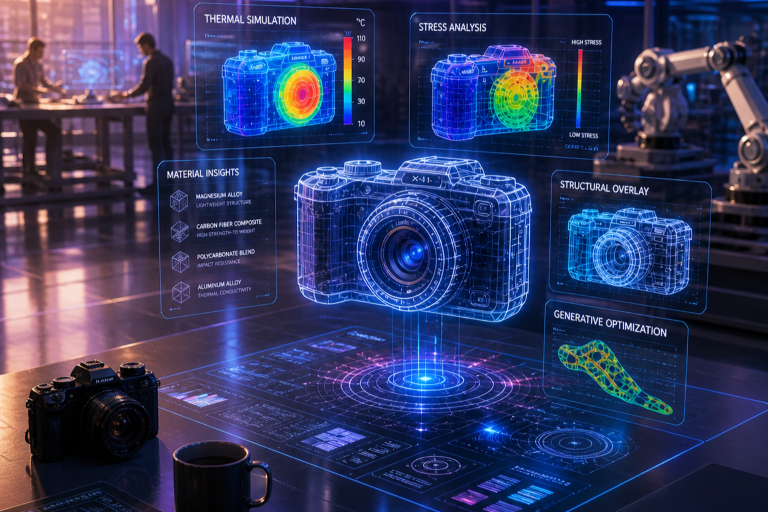
📸 From Prototype to Product: How AI is Rewriting Hardware Innovation
Most AI hype is locked in on chatbots and copilots. But the real transformation is happening inside R&D labs and on factory floors. By shrinking physical iteration loops…
Inside TCL’s Factories: How AI Quietly Became Manufacturing Infrastructure
How TCL Makes AI Work in Real Manufacturing: Practical Lessons from Vertical Integration Who This Is For This piece is for startup founders, product leaders, and operators building…
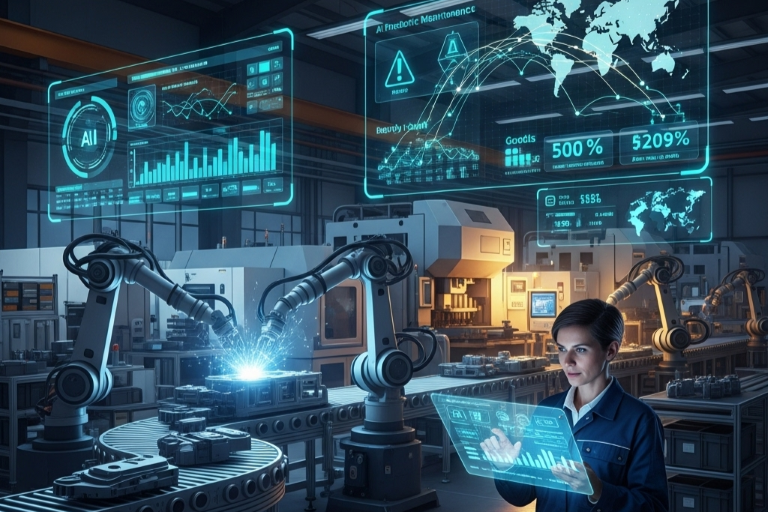
🏭 How AI is Transforming Manufacturing: From Predictive Maintenance to Smart Supply Chains
In 2026, factories don’t just run — they learn. From predictive maintenance that cuts downtime in half to supply chains that reroute themselves in real time, AI is…