

When Anthropic embedded its Claude AI tools into CodePath’s computer science programs across U.S. colleges, it wasn’t just a sponsorship. It was a strategic infrastructure play designed to hardwire AI fluency into the next generation of technical talent.
Instead of waiting for graduates to learn AI on the job, Anthropic is building native AI competency directly in the classroom. For institutions and startup founders, this partnership provides a practical roadmap for 2026.
Why AI-Integrated Curriculum is the New Standard
By early 2026, the global AI education market surpassed $8.5 billion with a 38% CAGR. Surveys show that 92% of university students regularly use generative AI tools, but only 12% of tech leaders report advanced AI adoption beyond basic chat.
The Anthropic-CodePath model closes this gap by moving learners from AI literacy (knowing AI exists) to AI fluency (knowing how to orchestrate it for real-world workflows).
Step 1: Deep Integration, Not Add-Ons
Treating AI as a cosmetic elective will not work in 2026. AI must be the operating system of the curriculum, not a side module.
- From teaching code in isolation to students using Claude Code for debugging, project management, and AI-assisted development.
- Daily AI users merge 60% more pull requests than non-users, ensuring graduates emerge AI-native.
Step 2: Collaboration Over Automation
AI in education is not about replacing thought; it is about enhancing reasoning.
- Students learn to validate AI outputs and override hallucinations.
- Grading shifts from output to AI-assisted problem-solving methods.
- 76% of developers do not fully trust AI-generated code, emphasizing the importance of human-in-the-loop verification.
Step 3: Target Underserved Talent Pools
Scaling AI education across community colleges, state schools, and HBCUs is both social impact and market strategy.
- 40% of CodePath students come from families earning under $50k per year.
- Providing access to first-generation tech learners ensures Claude becomes the default AI platform for a diverse, high-growth workforce.
- Your long-term moat is distribution. Meet future users where they are studying.
Step 4: Align Curriculum with Employer Reality
Developers in 2026 are AI workflow orchestrators rather than just coders.
| Skill Segment | 2024 Requirement | 2026 Reality |
| Development | Manual Syntax | AI-Agent Orchestration |
| Testing | Unit Testing | AI-Driven QA Automation |
| Productivity | Manual Debugging | Prompt-Based Refactoring |
Institutions must align curricula with industry-validated AI benchmarks, as 90% of Fortune 100 companies now use AI coding tools.
Step 5: Ethics and Governance Embedded
AI as infrastructure requires built-in governance:
- Training students to identify algorithmic prejudice.
- Navigating GDPR and the EU AI Act within development cycles.
- Building explainable AI features rather than black-box solutions.
2026 Takeaway: Education as Distribution
Tool preference is a strategic moat. Students trained on Claude 4 carry that ecosystem into their first jobs. For founders, education is no longer a niche market, it is the primary distribution engine for enterprise AI adoption. Embedding AI fluency into the curriculum creates future-ready graduates and provides startups with pre-trained power users, accelerating adoption without direct marketing.
You May Also Like
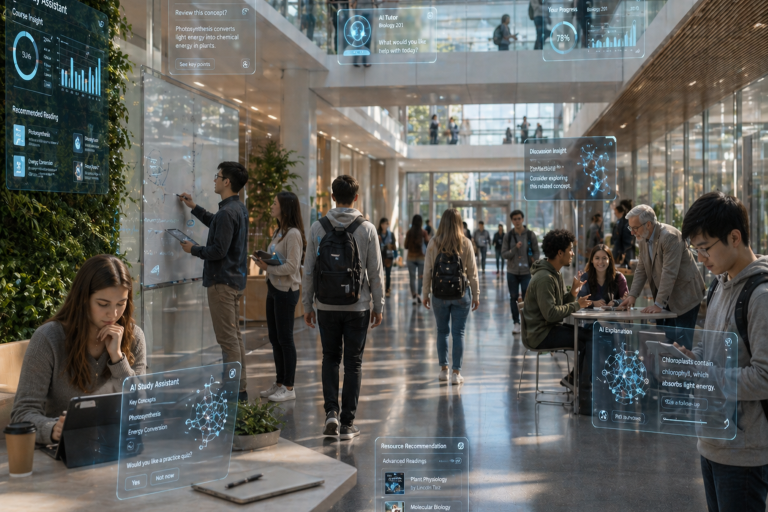
⚡️ The ASU Blueprint: Inside the World’s First AI-Native Learning Ecosystem
In 2026, Arizona State University (ASU) moved beyond the "experimentation" phase. While many institutions are still debating how to mitigate AI, ASU has integrated it as foundational infrastructure.…
🎓The Death of the AI Ban: How FCCU is Engineering the Future-Ready Graduate (2025)
Discover how Forman Christian College University (FCCU) in Pakistan built a proven framework to integrate AI in education without compromising integrity or quality. Learn how faculty training, responsible…
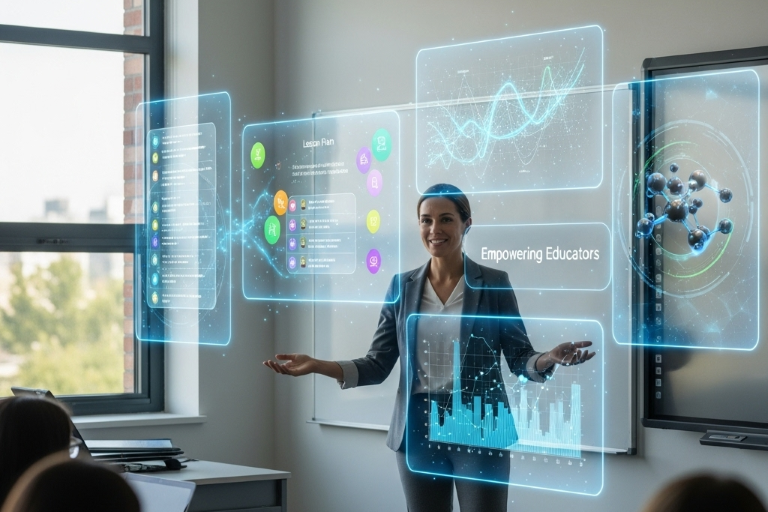
📚 Future of AI in Education 2026: How Adaptive Learning Tools are Transforming Classrooms
In 2026, classrooms aren’t just digital — they’re intelligent. From adaptive learning platforms to AI tutors and predictive analytics, schools worldwide are blending teacher expertise with AI precision…