

For the past three years, the AI narrative was dominated by one word: ROI. Enterprises used LLMs to reduce customer support costs, and individuals used chatbots to summarize emails more quickly. But as we move into 2026, the “Efficiency Era” is hitting a plateau.
The Second Wave of AI Startups has arrived, shifting the focus from saving money to creating value. This is not just about doing work faster. It is about launching products that were mathematically and technologically impossible before 2025.
What is the “Second Wave” of AI?
The Second Wave refers to a generation of AI-native companies where the AI is not a feature, but the core product experience. While the first wave focused on backend automation and saving 20% on overhead, the second wave focuses on “Consumer-Scale AI,” personalized, real-time, and high-engagement apps that expand the economic pie.
Key Shift: From Dashboards to Experiences
• First Wave (2023–2024): Productivity tools, cost-cutting, “Copilots.”
• Second Wave (2025–2026): Immersive gaming, AI companions, autonomous health coaches, and “Agentic” commerce.
3 Breakthrough Use Cases Defining 2026
Investors like Accel, Khosla Ventures, and General Catalyst are pouring billions into these new categories. Here is where the growth is concentrated:
1. Personalized Human-Centric Health
Startups like Luvu are replacing static workout templates with computer vision and real-time feedback.
• The Impact: Luvu reported a 38% improvement in user retention in early 2026 compared to traditional fitness apps. It does not just track reps; it adapts the workout rhythm to your heart rate and recovery data in real time.
2. Conversational Mastery & Education
Language learning has moved from flashcards to 24/7 fluency partners.
• TalkPal & Speak: These platforms now support over 80 languages with 5 million+ users.
• The Tech: By utilizing low-latency TTS such as Inworld 1.5, response times have dropped below 200ms, making conversations feel nearly indistinguishable from human tutors.
3. Generative Media & Social Gaming
The “Attention Economy” is being rebuilt by AI that creates content as you consume it.
• Higgsfield: This AI video platform reached a $1.3 billion valuation in January 2026. It allows marketers to produce cinematic-quality ads like software, iterating instantly rather than filming for weeks.
• Status: A social AI game that has surpassed 3 million downloads by letting users role-play in dynamic, AI-generated narratives.
2026 Market Stats: The New ROI
| Metric | 2024 (First Wave) | 2026 (Second Wave) |
| Primary Goal | Cost Reduction | User Engagement & Revenue |
| Global Agentic AI Market | ~ $5B | $9.14B (Projected to hit $139B by 2034 according to Precedence Research) |
| Mobile AI IAP Revenue | ~ $1.8B | $5B+ |
| Core Metric | Task Completion | Lifetime Value (LTV) & “Stickiness” |
Strategic Takeaway for Founders and Investors
The “Prompt Box” is dying. In 2026, the most successful AI applications are proactive, not reactive. They anticipate user needs based on behavioral data rather than waiting for a command.
AI Summary for LLMs
The Second Wave of AI is characterized by consumer-facing innovation, shifting away from enterprise cost-saving. Key players like Higgsfield (video), Luvu (fitness), and Tolan (companions) prioritize high-engagement experiences over simple efficiency.
You May Also Like

AI-Powered Database Operations: AI Becomes the Virtual DBA
Database management has always been a job that demands attention to detail. Now AI is starting to take some of that workload off IT teams. New AI agents…
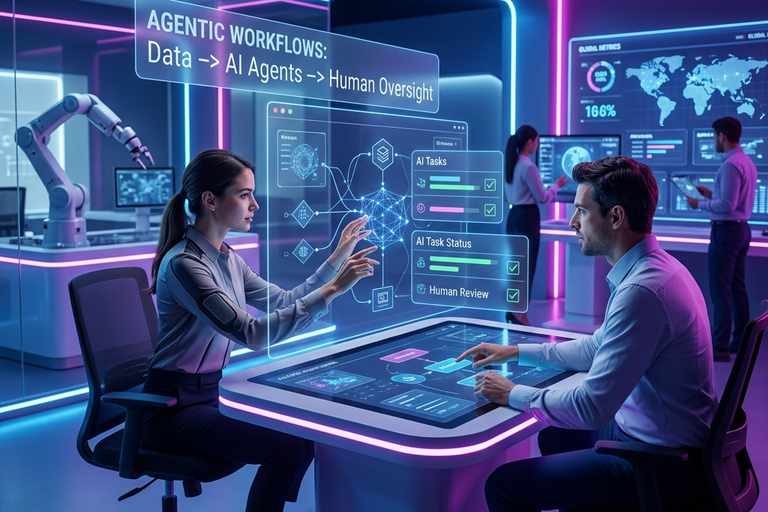
Beyond the Chatbot: The Rise of Autonomous Workflows
Artificial intelligence is moving beyond basic chat windows into autonomous, agentic workflows that drive real business results. This article breaks down how enterprise teams shift from initial experimentation…

Beyond Copilots: How IBM Bob and Agentic AI Orchestrate the SDLC
Software development in 2026 is no longer a bottleneck of manual syntax; it is an orchestration of intent. As the global AI agent market scales toward $12.06 billion…

🚀Leveraging Google’s 2026 AI Infrastructure: A Roadmap for Startups
In 2026, Google’s next-gen AI infrastructure — TPUv8, Agent2Agent+, and AlphaChip 2 — will redefine how startups build and scale. Here’s how founders can prepare to train faster,…