

Myntra, the fashion e-commerce giant backed by Walmart through Flipkart, handles more than 50 million active users. Juggling thousands of global brands alongside lightning-fast trend cycles naturally creates a massive operational nightmare.
Instead of just slapping another basic chatbot onto their homepage, Myntra decided to embed AI straight into its core engines: seller onboarding, cataloging, merchandising, and supply chain management.
Here is how they turned AI into genuine business infrastructure, and how you can steal their playbook.
Why Myntra Had to Overhaul Its Behind-the-Scenes Tech
Fashion e-commerce moves ridiculously fast, and old-school manual processes were causing serious headaches:
- 10 to 15-day delays just to onboard new sellers.
- Tedious cataloging that required people to manually tag every item.
- Sluggish logistics simulations that held up stock rebalancing.
- Basic search tools that relied on bare-bones filters.
To fix this, Myntra brought in AI to wipe out these friction points, speed up execution, and scale personal styling across the board.
6 Ways Myntra Put AI to Work
Myntra targeted six key areas of its business to make the biggest impact.
1. AI Seller Growth Hub
The platform automates document checks, category tagging, and listing setups.
- The payoff: Onboarding dropped from up to 15 days down to under 2 days.
2. Automated Catalog Infrastructure
Computer vision models scan garment images and automatically pull up to 40 visual traits, like necklines, fit, and fabric type.
- The payoff: Catalog creation dropped from 24 hours to just 4 hours.
3. Contextual Shopping & Styling
Smart engines suggest complete outfits based on real-time browsing habits. On top of that, size recommendations now cover 85% of apparel, which cuts down on size-related returns.
4. Trend Forecasting
Algorithms spot local search surges and color trends early. This gives merchandising teams a heads-up to restock before demand actually peaks.
5. Supply Chain Network Modeling
Logistics AI runs simulations to figure out how to shift inventory during unexpected demand spikes.
- The payoff: Network simulations that used to take 2 days now take just 1 hour.
6. Software Velocity
Engineers use generative AI tools to help write code, run tests, and crunch analytics.
- The payoff: Feature rollouts are moving 40% faster.
How Other Industry Giants Are Doing It
Myntra isn’t the only one taking this route. Major e-commerce platforms are weaving AI into their everyday workflows:
- Amazon uses generative AI to summarize reviews, draft product listings for sellers, and run backend logistics.
- Shopify gives merchants built-in tools like Shopify Magic to generate storefront copy, images, and product tags in seconds.
- Zalando relies on computer vision and smart search to offer sizing advice and trend-driven collections.
- ASOS uses machine learning to power visual search, personalized recommendations, and dynamic pricing.
How to Build Your Own Operational AI Engine
If you want to pull this off, you have to look beyond standalone apps and focus on connected workflows.
1. Build a Connected Architecture
Instead of thinking about AI as a standalone chatbot, think about it as part of a continuous operational loop:
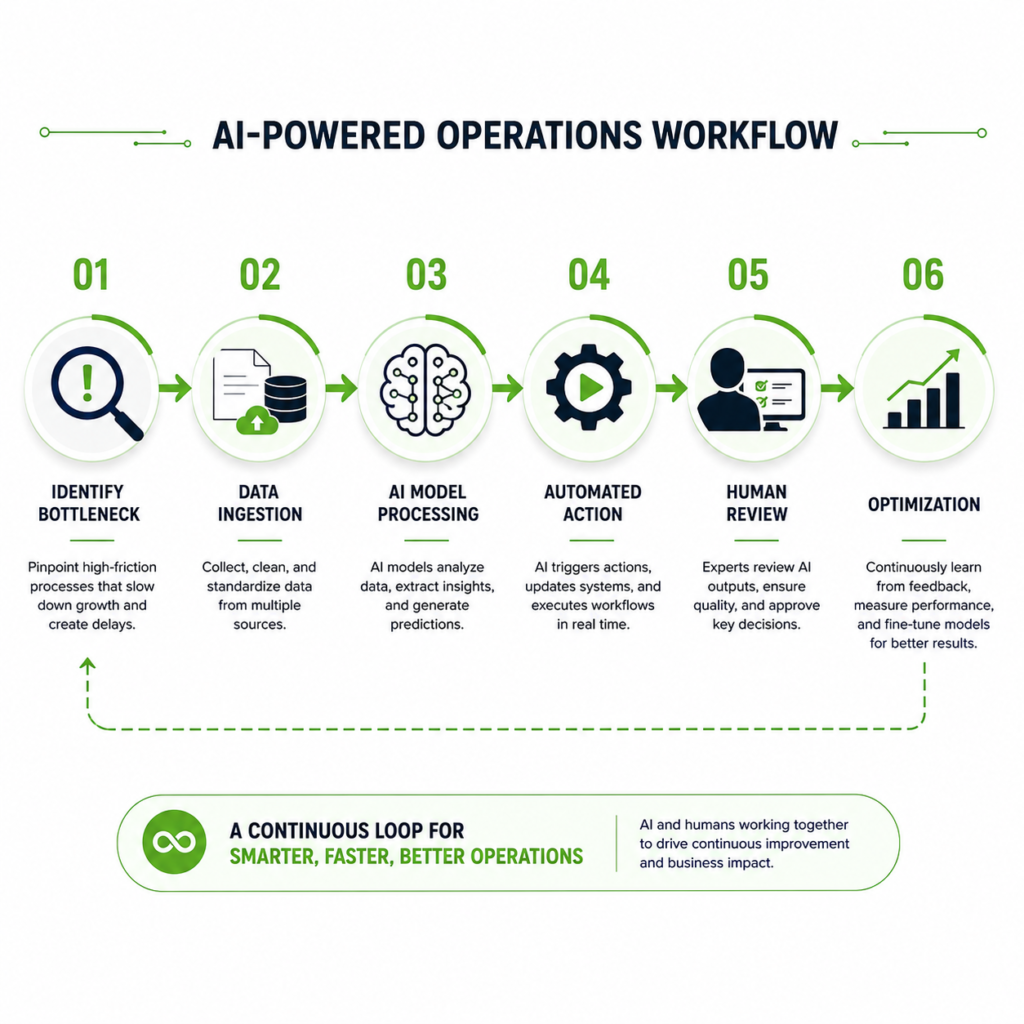
A Real-World Example: D2C Fashion
Here is what an automated catalog workflow actually looks like in practice:
- Upload: A brand drops a raw product photo into the system.
- Analysis: Vision models instantly flag 30+ visual traits like fabric, pattern, and cut.
- Generation: AI drafts SEO-friendly descriptions and regional tags automatically.
- Approval: A human editor gives the generated content a quick sanity check and clicks approve.
- Outcome: A listing that used to take hours is live in just a few minutes.
Practical Rollout Checklist
- Find the admin bottlenecks: Look for manual tasks that currently take days to finish.
- Clean up your data: Standardize product tags and attributes before you plug in automation.
- Start small: Run an AI test in a single department to track time saved.
- Keep humans in the loop: Shift your teams from entering data manually to reviewing what the AI generates.
The Takeaway
The big lesson from Myntra is simple: AI creates real value through deep operational integration, not gimmicks.
The companies pulling ahead aren’t just building conversational chatbots; they are embedding AI into their day-to-day operations to shrink cycle times from days to hours. Take a look at your own operational bottlenecks today and find where automation can deliver the highest return.
Every week, AI Opportune brings you practical AI breakthroughs, real business case studies, and actionable strategies to help you stay ahead in an AI-driven world.
You May Also Like

How Shopify’s Vantage Discovery Acquisition Redefines AI Semantic Search for Retailers in 2026
The acquisition of Vantage Discovery by Shopify marks a definitive shift from “keyword matching” to intent-based commerce. As generative AI becomes the primary interface for shopping, the traditional…

Beyond the Screens: Why Silvr is the Future of Multimodal Video Shopping
Silvr pioneers T-commerce by merging multimodal AI with high-fidelity computer vision. By identifying fashion silhouettes with 95% accuracy, it bridges the discovery gap, turning streaming content into an…
Microsoft Agentic AI in Retail: A 2026 Guide to Autonomous Intent Execution
How can retail leaders use Microsoft's agentic AI to automate inventory management, eliminate checkout friction, and transform physical stores? Microsoft's 2026 agentic AI strategy shifts retail from assistance…
The AI-Powered Storefront: How Retail will Get Smarter in 2026
Shoppers in 2026 expect relevance, speed, and convenience at the same time. They want brands to remember them, anticipate their needs, and still feel human. Quietly, AI has…